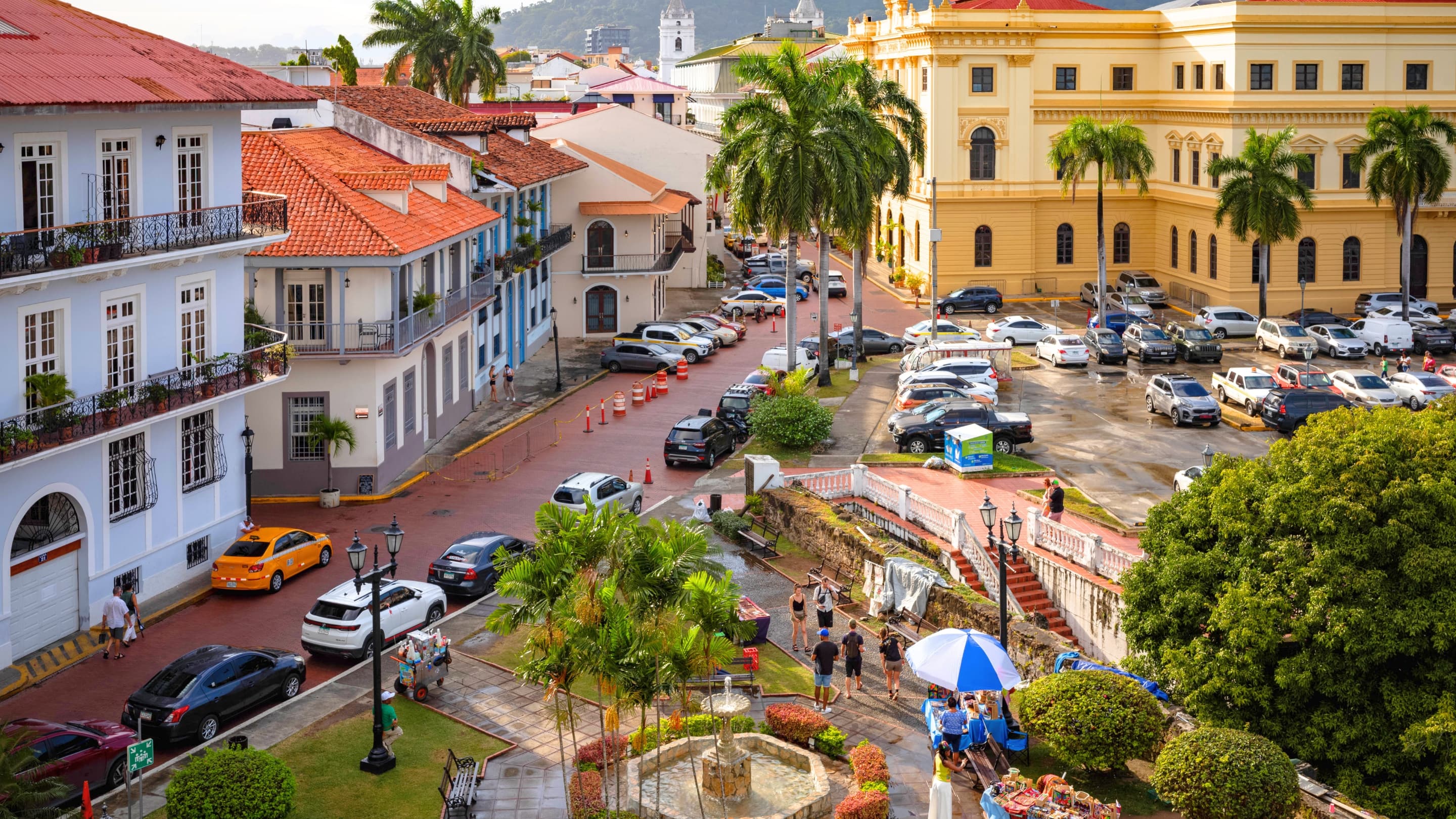
A guide to living in Panama: quality of life, safety, healthcare and education
June 8, 2026 · 8 min read
An honest look at what daily life is like for a foreigner who decides to settle in Panama.
Investing in a property is a financial decision. Moving to live somewhere is a complete life decision, and it deserves information as rigorous as any market analysis. Beyond rental yield or capital appreciation, those considering Panama as a new country of residence ask something different: what is daily life really like here?
This guide honestly reviews the aspects that matter most when evaluating quality of life in Panama: safety, healthcare, education, connectivity and social integration.
1. Safety: where to live and what to expect
Panama holds a relatively favorable position on safety within the Central American region, with a level of crime considered moderate compared to several of its neighbors. However, as in any large city, safety varies significantly by area.
The areas with the best safety perception for expatriates include Costa del Este, Clayton, Punta Pacífica, San Francisco and Albrook, where coexistence with the international community is smooth and the treatment of foreigners is usually cordial, especially for those who speak Spanish.
Outside the city, communities such as Boquete and Coronado maintain high safety levels, largely thanks to the strong presence of organized international communities. As in any country, there are specific sectors with higher crime rates that are best avoided; the practical recommendation for any newcomer is to visit and research the specific area before committing to a home, ideally renting first before buying.
2. Healthcare: international hospitals and accessible costs
Panama's private healthcare system is one of the most solid in the region, with hospitals in Panama City affiliated with recognized international networks that offer care in Spanish and English with standards comparable to those of North America and Europe.
- High-quality private medical care concentrated mainly in Panama City, with internationally recognized hospitals.
- Private medical costs significantly lower than in the United States or Western Europe for comparable procedures.
- Wide availability of private health insurance designed specifically for foreign residents.
- Medical staff frequently educated or trained abroad, with good command of English at the higher-tier centers.
Outside the capital, specialized medical coverage is more limited, which is a factor to consider for those evaluating interior or coastal areas far from the city, especially if they require frequent or specialized medical care.
3. Education: international options for families
For families with children, the educational offering is one of the most decisive factors. Panama has an education system combining public, private and bilingual schools, with a significant concentration of international options in Panama City.
International schools in Panama offer curricula from different countries: the United States, France, the United Kingdom and Germany, among others, which facilitates the educational continuity of children of expatriate families who might eventually return to their country of origin or move to another destination.
It's worth being honest on one point: while Panama has excellent private and international schools, the public education system doesn't always reach the same standards. The vast majority of expatriate families opt for private education, which should be factored into the family budget when planning the move.
4. Digital connectivity and daily life
Panama has one of the best telecommunications infrastructures in the region. In urban areas, connectivity is solid, with fiber optics present in most of the capital's neighborhoods and residential speeds competitive internationally.
For those who work remotely or manage international businesses: there is a growing offering of coworking spaces, especially in Panama City, and digital life is fully integrated: digital banking, mobility apps like Uber and DiDi, e-wallets, and immigration and financial procedures manageable online.
5. Cost of living: more accessible than many imagine
One of the most consistent attractions for expatriates from the United States, Canada and Western Europe is Panama's relatively lower cost of living, without sacrificing access to modern infrastructure. Property rental, utilities and food usually cost significantly less than in the home cities of most expatriates, allowing a comfortable standard of living on a more moderate budget.
6. Social integration and the expatriate community
Panama has a broad, diverse and well-organized expatriate community, particularly in Panama City, Boquete and Coronado. There are numerous groups, clubs and social organizations that facilitate the integration of new residents, which considerably reduces the adaptation curve that moving to a new country normally involves.
Panama's multiculturalism — the result of its history as a commercial crossroads between continents — also favors integration: it's common to find Chinese, Middle Eastern, South American, North American and European communities actively coexisting within the Panamanian social fabric.
Frequently asked questions
Is it safe to live in Panama as a foreigner?
Generally yes, especially in the areas with the greatest international community presence, such as Costa del Este, San Francisco, Punta Pacífica or Boquete. As in any city, it's advisable to research the specific area before moving and to avoid sectors with higher crime rates.
Is the Panamanian healthcare system reliable for foreigners?
The private healthcare system in Panama City is high-level, with hospitals affiliated with international networks. Specialized coverage is more limited outside the capital, a factor to consider depending on the chosen area.
Do I need to send my children to a private school in Panama?
It isn't mandatory, but it's what the vast majority of expatriate families choose, given that the private international and bilingual education system consistently surpasses the public system in terms of standards and international curricular continuity.
How easy is it to socialize and integrate as a newcomer?
Relatively easy, thanks to an active and organized expatriate community, especially in Panama City, Boquete and Coronado, where there are social groups and clubs oriented specifically toward facilitating that integration.
Is it advisable to rent before buying a property to live in?
Yes, it's a practice recommended by most advisors. Renting during the first months allows you to get to know the area better, assess the real convenience of daily life, and make a more informed purchase decision.
Conclusion
Quality of life in Panama isn't a marketing slogan: it's backed by modern infrastructure, a solid private healthcare system, international educational options and an established expatriate community. As with any international move, the key is to choose the area well according to each family's priorities — safety, proximity to medical services, educational options, or pace of life — and to take the step in an informed way, ideally getting to know the country firsthand before committing long-term.
Thinking about investing or settling in Panama?
Book a personalized consultation and receive a strategy tailored to your wealth, financial and immigration goals.